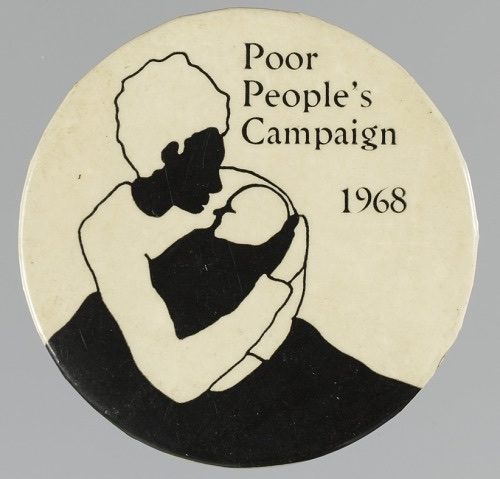
This is in loving & living memory of all who sacrificed to build the original Poor People’s Campaign (original PPC), in existence from December 4, 1967, to Summer 1969.
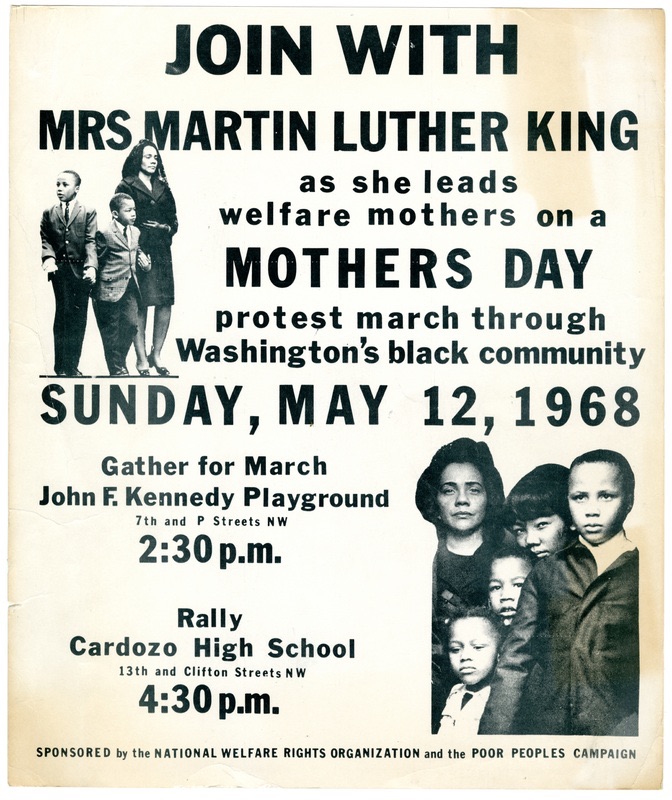
The organizing culminated in a six-week community called Resurrection City in Washington, DC, from Mother’s Day (May 12) to the early morning of June 24, 1968.
The original Poor People’s Embassy was an organizing center for the Campaign in New York City at West 142nd Street & Fifth Avenue. Out of here, Cornelius “Cornbread” Givens, Gilberto Gerena Valentín, Jimmy Collier, and Rev. Frederick Douglass Kirkpatrick among many others carried on the work to organize the original PPC.
Since the time of the courageous acts of those who were part of Committee of 100, the Caravans to Resurrection City, and the City itself, they have many stories that have yet to be told.
We re-establish the Embassy to preserve and tell these stories, free of distortion and revisionism.
A garden of flowers that rose on May, Mothers Day March in Washington, DC.
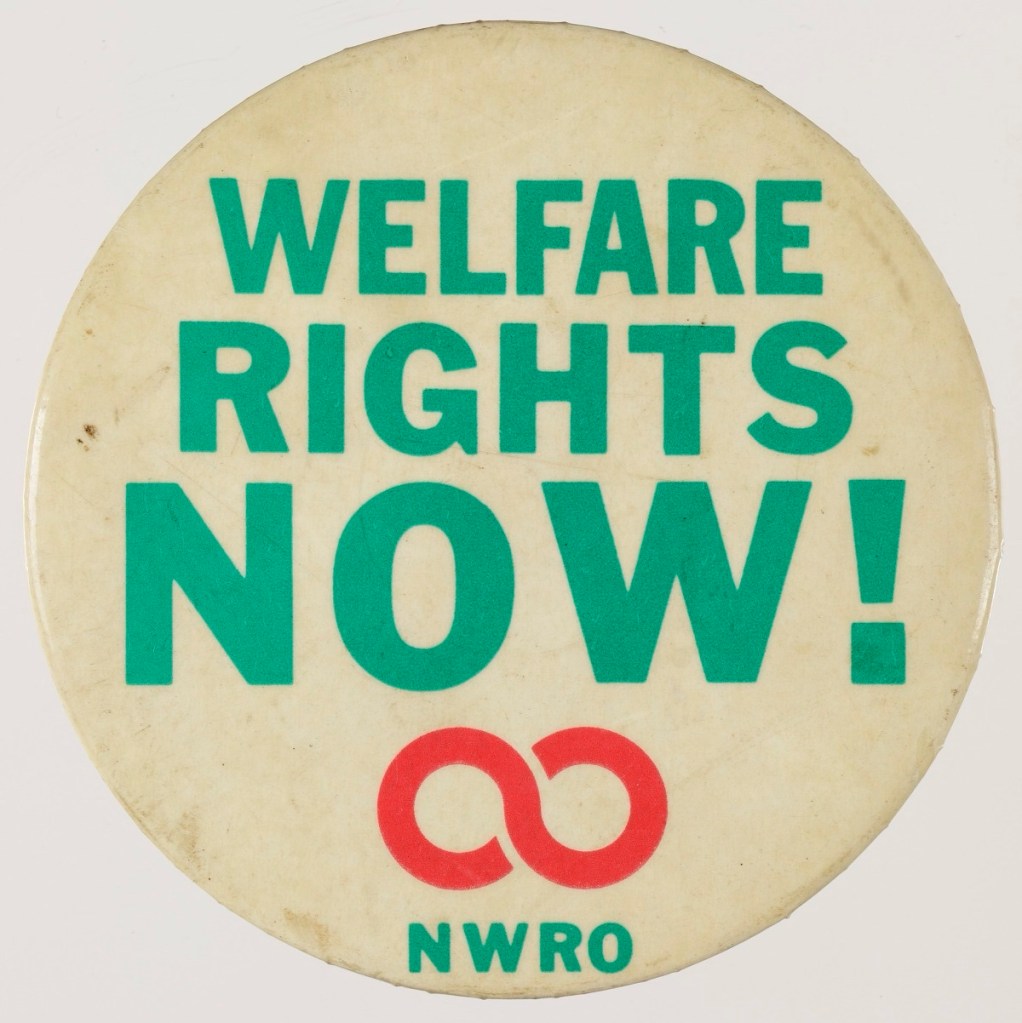
All the sisters and supporters of the 5000 womem of the National Welfare Rights Organization and the New York Mothers Welfare Association and allies.
They traveled from across the country: Indigenous, Blacks, Puerto Ricans, Chicanos, and poor Whites from Appalachia, daring to call for a new dawn to rise with a sea of love, carrying our demands for
* the right to food on the table rather than being hungry,
* the right to decent housing and to live as a human being,
* the right to justice rather than brutality,
* the right to education rather than ignorance,
* the right to medical care,
* the right to bilingual education,
* Indian srlf-determination,
* the right to a job and training ,
* the right to a guaranteed income and social security
* an end to racism,
* the right to peace rather than war,
* and the right to freedom for the people,
* which is a crime to deny poor people to live as human beings.
Marching down the street in a burned-down city,
we were invincible in the eyes of America, the richest country in the world.
Our chants of
Mothers’ Power
Women’s Power
Poor People’s Power
Welfare Rights Now
We Want What Is Ours
Bring the Troops Home Now
As the March ended, we rallied ar Cardozo High School Stadium, with Johnnie Tillmon, Coretta Scott King, Diahann Carroll, Julia Robinson Belafonte, Ethel Kennedy, Marian Wright Edelman, Beualh Sanders, Chief Big Snake and his wife Elsie, and many others.
It was the seed that gave light and the engine to the Poor People’s Campaign of Resurrection City on May 13th. History has no blank pages. It still speaks in volumes for today and honors the past and future, so let us embrace our heroes that gave life for the living for another world possible.
As Martin Luther King Jr. said,
“The ultimate tragedy is not the oppression and cruelty by the bad people but the silence over that by the good people.”
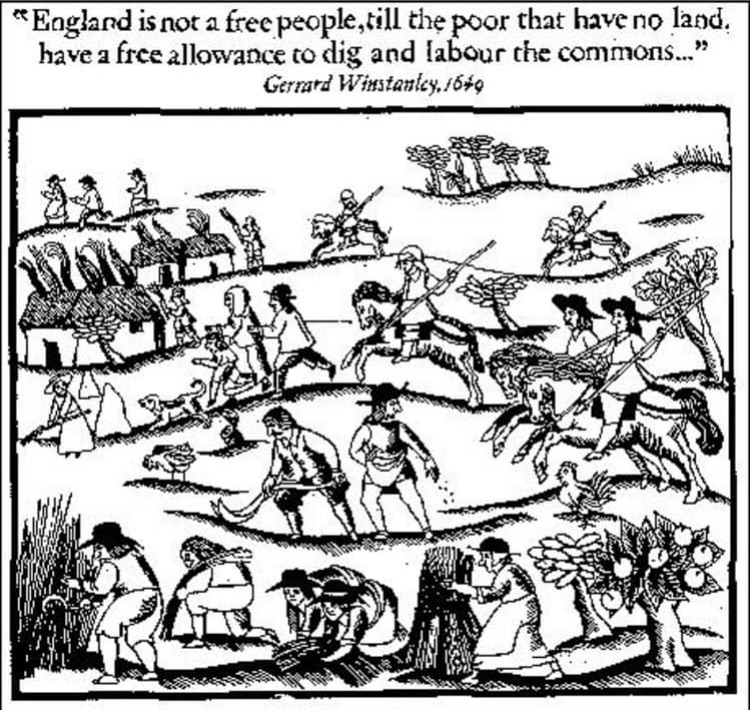
On 1 April 1649, The Diggers began to occupy St. George’s Hill, Surrey, England to plant in defiance of the law, the church , and landlords to build what Gerard Winstanley called “a common treasury for all.”
In 1966, The Diggers of San Francisco emerged from the Free City Collective for all human needs to be free. Two years later, their commitment manifested in their God’s Eye Bakery at Resurrection City, the community at West Potomac Park in Washington, DC, formed by the original Poor People’s Campaign.
Poor People’s Embassy salutes the legacy of The Diggers of 1649 that inspired strong allies of PPC 219 years later,
Photo Courtesy of the National Museum of African American History & Culture, Smithsonian Institution
On 5 February 1968, the National Coordinating Committee of the National Welfare Rights Organization (NWRO) met with Dr. Martin Luther King Jr. in Chicago to build the coalition for the Poor People’s Campaign. NWRO were instrumental in the Mother’s Day March that commenced Resurrection City three months later.
Poor People’s Embassy/ Embajada de la Gente Pobre commemorates this building of solidarity that is necessary to this day.
Source: “History of the NWRO and NWRU. National Welfare Rights Union
From the voices of the original Poor People’s Campaign on the 55th Anniversary (May 12th, 2023) of the Sunday Mother’s Day March Throughout the Streets of Washington, DC, an Original Salute with love.
To the brave women warriors of the National Welfare Rights Organization and the allies that laid the foundation for the Poor People’s Campaign and the seed that rose unto the Sacred Land into Resurrection City. From the voice and heart from a Rainbow of Nations. Before Occupy Wall Street ever thought of creating something, we were invisible in the eyes of American “freedom” of press, of being poor, hungry, sick, in low-wage jobs, lack of training and unemployment, the right to organize unions, the lack of opportunity of education and bilingual education, the lack of health care, the rigid apartheid system, and the sickness of the caste system US.
It was paradise for the wealthy people in America and damned for the people of Earth. The sickness of war on Vietnam’s people. This was a Spring spirit of struggle 55 years ago, for all of us who dared to stand up against the wall of injustice, brutality, lies, and injustice against the Vietnamese people. And the cry for peace now.
And even now, 55 years later, history has repeated itself with the plague of economic hardships of millions of people in America: homelessness, food insecurity, and the mass of American apartheidism. Drug abuse, high suicide rates, and the Cold War mentality.
In the theater of war of billions of dollars for the war machine but not for social programs for the masses of American people. The Pharaoh;; of now, who has blinded himself with no end to the madness of war and the chants of people around the world are chanting, “Hey Joe Biden, how many mothers and children have you killed today?”
To the Poor People’s Campaign y La Canpaña de La Gente Pobre
To the citizens of Resurrection City
Los cuidadanos de la Ciudad de la Resurrección
I salute the heroes and veterans with the sea of love
To Stanley Levison, Miriam Wright Edelman, Martin Luther King, Jr, Ralph Abernathy – the seeds that gave birth to the Poor People’s Campaign.
To Cornelius “Cornbread” Givens, Frederick Douglass Kirkpatrick, Jimmy Collier, Gilberto Gerena Valentín, Sister Annie Chamberrs, Tillie Walker, Mattie Grinnell, Chief Big Snake, Reies López Tijerina, Rodolfo “Corky” Gonzales, Hank Adams, Clyde Warrior, Elsie Snake, George & Rose Crow Flies High, Click Johnson, Donald J. Richmond, Jr. (Tekawerente) – for keeping the struggle.
And deep gratitude to Sister Linda Arako, (Cree), who gave us permission to build the City of Hope.
And to Brother Chairman Rap Brown of SNCC and Stokely Carmichael, who visited us at Resurrection City
And a special thanks to Walt Reynolds of the Diggers, who came and created God’s Eye Bakery “Free Bread Forever”
All the allies that shared their love and heart and soul with the voiceless of the brutal pain of being poor in the Other America, in the richest country in the world, Blacks, Indigenous, Puerto Ricans, Chicanos, and poor white Appalachians were on this sacred space grows the City of Resurrection, marching and chanting in the streets of Washington, DC, to petition the seat of government for our democratic right to free speech
To hear our suffering
As nonviolence was our only weapon
LBJ, Ramsey Clark, the fearmongers, the Dixiecrat Democratic Party and Republican allies and the oligarchy
And J Edgar Hoover and the surveillance state, who were denying our constitutional rights, our right to assemble
We were now the red menace, the black menace, the brown menace, and the poor white menace
Because we were brothers and sisters
In a rainbow of nations
From the oppressed people
Marching with our voice
Guided with love
The power structure feared us
We were demanding peace, ending the war in Vietnam
Freedom for poor people against injustice
Against police brutality and hunger
Foor for poor people and jobs, to end institutional apartheid USA.
From their own political interests, of, determination to destroy the Poor People’s Campaign and Resurrection City, our home with their spies and their destructive campaigns and their infiltration of our City with their ghetto informers
They feared the truth of the Poor People’s Campaign and to this day it’s the same
Our history of the Poor People’s Campaign
Even with the elite lynch mob mentality, brutality and murder
Of the poor people of Resurrection City
Our struggle
We saw the gains of our demands years later: free food stamps, Supplemental Security Income, Bilingual education, some public housing, and some improvements of Indigenous demands
And Improvements of Puerto Rican demands
In front of my own eyes on April 30, 1975, I saw the end of the Vietnam War
Peace now! Peace now!
“A nation that continues year after year to spend more money on military defense than on programs of social uplift is approaching spiritual death.” (Martin Luther King Jr)
Over 50 years ago, we were 60 million poor
And now under of the so-called era of the two-bit politicians
Poor people in the US now total 150 million people
With the same thing or even worse than what it was
But we need a real poor people’s campaign
We were the real poor people
We were not slackers
Not an Elmer Gantry from the movie
Preaching only the value of a hustle
In the tradition of the American hustler neoliberaism
That we were, in 1968, the original Poor People’s Campaign
We stood for peace and not war or supporting the war machine
Like some people claim that they are moral
But they support the war machine
Not peace on Earth
We paid the sacrifice price for opposing the War in Vietnam
Just as we used to chant
Hey, hey, LBJ, how many kids did you kil today?
As history is repeating itself
As the young people are marching and chanting today
Mattie Grinnell (Mandan) speaks to the press outside the Supreme Court during the 1968 Poor People’s Campaign in Washington, D.C. Photograph by Bill Wingell Source: National Museum of African American History & Culture, Smithsonian Institution, “Grounds for Solidarity.” https://nmaahc.si.edu/explore/stories/grounds-solidarity
Poor People’s Embassy commemorates 10 November – IP Heroes Day – as called by the Indigenous Peoples’ Movement for Self-Determination & Liberation to celebrate by name all who have been active in global Indigenous struggle.
Below are the names of those known for joining the American Indian (Indigenous peoples of Abya Yala) contingent of the original Poor People’s Campaign. They joined hands with Black, Puerto Rican, Appalachian White, and Mexican family to fight for fishing, land, economic, and all human rights. One, Big Snake (Ponca), served as president of the city council of Resurrection City, PPC’s 1968 protest encampment in the belly of the beast, Washington, DC., and he was regarded as the true mayor of the City. Mattie Grinnell (Mandan), at 101 years of age in 1968, was our Grandmother as well as a freedom fighter. Tillie Walker (Mandan-Hidatsa) was a tireless organizer for the Campaign, Committee of 100, the Caravans, and Resurrection City.
Mattie Grinnell (Mandan)
Clyde Warrior (Ponca)
Della Warrior (Ponca)
Tillie Walker (Mandan-Hidatsa)
Big Snake (Ponca)
Elsie (Chickasaw)
Martha Grass (Ponca)
Mel Thom (Walker River Paiute)
Leona Hale (Mandan)
John Belindo (Kiowa/Navajo)
Alfred E. Elgin, Jr. (Pomo)
Hank Adams (Assiniboine-Sioux)
George Crow Flies High (Hidatsa)
Rose Crow Flies High Hidatsa)
Al Bridges (Nisqually)
Maiselle Bridges (Nisqually)
Victor Charlo (Bitterroot Salish)
Wallace Mad Bear Anderson (Tuscarora)
Donald J. Richmond, Jr. (Tekawerente) (Mohawk)
Vine Deloria, Jr. (Standing Rock Sioux)
Frank Allen (Stillaguamish)
Phyllis Howard (Hidatsa)
Myra Snow (Hidatsa)
Louella Young Bear (Mandan)
Naomi Foolish Bear (Hidatsa),
Agnes Yellow Wolf (Hidatsa)
Patricia Baker (Blackfeet-Hidatsa)
Andrew Dreadfulwater (Cherokee)
George Groundhog (Cherokee)
Edith McCloud (Nisqually)
Evelyn Dwimoh (Sisseton-Wahpeton)
Hazel Harold (Pima)
Mel Walker (Mandan-Hidatsa)
D’Arcy McNickle (Flathead)
Joseph Garry (Coeur d’Alene)
Helen Peterson (Northern Cheyenne/Lakota)
Wendell Chino (Mescalero Apache)
Robert K. Thomas (Cherokee)
Robert V. Dumont ( Assiniboine)
Lucille Knight (Lakota)
Mrs. Ellis Blackhorse (Lakota)
Charlie Cambridge (Diné)
Janet McCloud (Nisqually)
Sam English (Ojibwe)
Russell Walden (Chickasaw)
Robert V. Dumont (Assiniboine)
Saludos to American Indian organizations with PPC :
Survival of American Indians Association (SAIA)
National Indian Youth Council
Daughters of Indian Uprisings
Coalition of American Indian Citizens
Saludos to their comrades in internationalist struggle:
Jimmy Collier & Rev. Frederick Douglass Kirkpatrick, Everybody’s Got a Right to Live
Jimmy Collier & Rev. Frederick Douglass Kirkpatrick
Everybody’s Got a Right to Live
Broadside Records, 1968
By Ángel L. Martínez
“Our KING Will Never Die”
Printed on the lower left side of the front album jacket
In 1968, the original Poor People’s Campaign (PPC) burst into the consciousness of a pivotal year of global activism. Through its broad-based formations in the Committee of 100 and the Caravans, the PPC boldly confronted politicians and the state oppression in Washington, DC. They organized a community in a protest camp called Resurrection City in the National Mall’s West Potomac Park in May that lasted until late June. Blacks, American Indians, Puerto Ricans, Mexicans, and Appalachian whites joined forces to demand what poor people needed and received solidarity in the form of free food, housing, education, medical care, and musical performances.
The original PPC also made its contribution to conscious cultural expression. One work was a soundtrack of the movement of the poor. Fifty-five years after its release, Everybody’s Got a Right to Live is a collection of 11 songs performed by the bards of Resurrection City, Jimmy Collier and Rev. Frederick Douglass Kirkpatrick.
To delve into the songs that propelled the struggle for poor power, a fuller understanding of both the album and the original PPC is revelatory. A soundtrack of a struggle against poverty and how poor people organized is a reflection of the ideological direction of the people and events that led to the creation of Resurrection City and its 42-day protest against injustice that was considered a threat by Congress, the White House, and the national security apparatus in the late Spring and early summer of 1968. To better understand what and why the City’s residents, and those in solidarity with them, fought, the songs provide a broad array of clues.
The original PPC remains a great unsung part of that moment of transition from the Civil Rights Movement (CRM) to a movement for human rights. Conventional narratives of the history of the CRM, that is, those often found in corporate media and the school materials and other propaganda they design, often focus on its clerical leadership and draw assumptions based on that perspective. Yet just as Martin Luther King Jr. in the last year of his life realized the necessity of unity in struggles as well as struggle, the citizens and friends of Resurrection City returned the favor by its development as a commons for broad-based struggle. And he wanted Collier and Kirkpatrick to bring song to what was to be his final fight, the album title being its sacred principle: Everybody’s Got a Right to Live.
The title song has gained recognition in the last five years largely by its being used as a zipper song, in which a chorus is sung over and over with new lyrics added for each repetition. While that approach may be well-suited for singing along, the depth of the full lyrics can be lost among listeners unfamiliar with the class-consciousness of the original composition. To hear the whole selection of verses for what they are – words in struggle against racism and for class struggle – enlightens as it continues to reverberate into today. Written with a lively beat by Kirkpatrick, it provides a damning portrait of poverty and proposes a program on how to end it.
Black man dug the pipeline
Both night and day
Black man did the work
While the white man got the pay.
Note the difference with context when hearing the above as well as the chorus:
Everybody’s got a right to live
Everybody’s got a right to live
And before this campaign fails,
we’ll all go down to jail
Everybody’s got a right to live
If the original lyrics – stanzas and chorus – printed in the accompanying album booklet do not make clear the purpose and intent of the duo and their music, the liner notes elsewhere here contain vivid references: “The team of Collier-Kirkpatrick is in the tradition of using music as a weapon for ideas …” (p. 1). In that spirit, “I Can’t Take Care of My Family Thisaway” is written from the perspective of a man of burgeoning consciousness who was compelled to come to Washington to cry out against the crippling poverty he faces daily. In other words, the perspective of the many who joined the Caravans toward Resurrection City.
“Notes on Frederick Douglass Kirkpatrick” (p. 2) is a reading to understand his trajectory from growing up in Jim Crow Louisiana to organizing for integration and, having become a target of Klan terror and their police allies, worked to organize Deacons for Defense and Justice. He was a cleric of the grassroots whose story needs more telling. “Quotes from Jimmy Collier” (p. 7) are ways to understand the aesthetic, spiritual, and theoretical foundations of their approach to protest song: “Music is the easiest way to tell the story of what we’re trying to do. … These songs are one of the best tools we have for getting people together, giving them the unity to act effectively.”
The rebellions against racism and poverty conditions across the urban US, also figured into the album. Collier’s “Burn, Baby, Burn,” written two years before, proved resilient and prescient enough for inclusion here. It is an understated, midtempo recitation that outlines a society that incessantly ignores the poor until the inevitable happens. Yet where the song is at its most forceful is in the litany of demands in the final verse:
I really want a decent education
I really want a decent job now
I really want a decent opportunity
I want to grow like everybody else
Thr last stirring line is then repeated until the fade-out.
Kirkpatrick’s “The Cities Are Burning,” a contemplative Delta blues, fuels the spirit of James Baldwin’s pen and, to link class and race, warns that “the fire next time” is not merely a religious allegory:
I say these cities are burning
All over the USA
Yes, you know if these white folks don’t settle up soon
We’re all gonna wake up in judgement day.
As noted early on in “Burn, Baby, Burn,” the songs emphasized the Campaign as having no use for either President Lyndon B. Johnson or Vice President and that year’s Democratic presidential candidate Hubert H. Humphrey. To further bring that point to the front, Collier’s “Washington Zoo” is an understated yet devastating envisioning of the former, along with members of Congress, as residing in it.
“And you can throw him peanuts too.”
Kirkpatrick’s “We’re Gonna Walk the Streets of Washington,” unlike the title track, was deliberately crafted for rousing up a rallying crowd to sing along. Its marching cadence makes emphatic the reasons why people are walking, such as to “stop police brutality” and “the rats from eating our babies.” (The latter refers to a scandalous hazard of urban poverty in the 1960s.)
Even tender moments are weaved with biting commentary amid profound storytelling. On “I’m Going Home on the Morning Train,” Kirkpatrick begins his plaintive yet jaunty uptempo song with memories of a mother’s struggle to survive, his spoken words and guitar accompaniment alternating with the sung chorus. Yet the big surprise? Near the end –
“White folks be surprised when they find us organized.”
The Vietnam War and the African liberation movement were on the minds of the people of Resurrection City and those who stood in solidarity with them. Two songs by Collier, “The Fires of Napalm” and “Hands Off Nkrumah,” explicitly reflected the internationalism at the core of the original PPC that needs deeper acknowledgement.
The haunting downtempo that is “The Fires of Napalm” is one of the greatest unheard songs of the struggle against the war.. Its internationalism makes this a moving listen, invoking the deep connection between struggles at distant parts of the Earth. Also, the following words tersely show the bankruptcy of any capitalist war that is allegedly waged for “freedom”:
Rivers running the color of red
Rice paddies full of the other dead
It’s for freedom of the Vietnamese we claim
The same freedom that the Indians gained.
It is soon followed by a stirring call for peace:
We are the children, God is the father,
We and the Vietnamese and the Viet Cong are brothers
Their children are our nieces and nephews like the others
And our sisters are those Vietnamese children’s mothers.
Substitute any country that is dubbed a so-called “enemy” of the United States, including its organizations and its people, and the song retains its power in the present day. It’s a reminder of who are the true enemies of poor people, then and now. In fact, “Hands Off Nkrumah,” a reference to Kwame Nkrumah, the revolutionary founder of Ghana, is a statement that also can easily be rewritten with any present-day leader of that supposed “enemy” state.
As you listen to the album, think about how all of this is accomplished by two powerful Black men and their guitars, each having spent the decade in a struggle where they too were targets of state and white supremacist violence and repression, then documenting a pivotal moment of movement. Think about as well how the original PPC and Resurrection City hold lessons for today. Finally, think about how its original soundtrack recording is not just a title but a long-lasting call that echoes long after you hear that “Everybody’s Got a Right to Live.”
The entire album is widely available for listening, and is available for download or CD on demand from Folkways Records at the link below. (On the page, you can also freely download the liner notes booklet with photographs, drawings, biographical material, and even some of the songs’ music sheets.)